
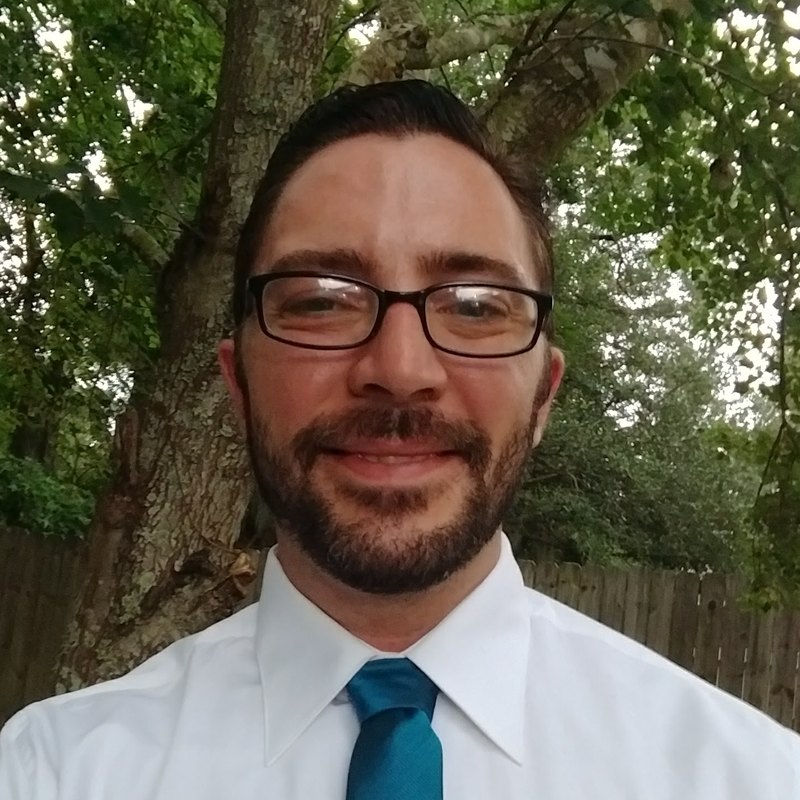
Managing Principal
Christopher Skinner
Managing Principal, OCOA — which he founded · Columbia, South Carolina
Maintenance and facilities manager · former reliability engineer
For ten years Christopher Skinner maintained UH-60 Black Hawks for the U.S. Army — MOS 15T, helicopter repairer, across four deployments.
In Army aviation, everything is accounted for and written down. Not just the parts replaced and the hours logged, but the number of washers removed from a superficial cover panel. Nothing is left to memory, and nothing is taken on anyone's word. The record is the aircraft's permission to fly.
A helicopter does not fly on trust. It flies on a record.
Nineteen years of keeping things from breaking
After the Army came nine years in industrial reliability — first as a reliability engineer, now as a maintenance and facilities manager. The plants have included automotive, aluminum extrusion, food packaging, nuclear and aerospace: places where an unplanned stop is measured in thousands of dollars a minute, or in something worse.
The work is condition-based, and it is hands-on:
Practice
- Vibration analysis and oil analysis
- Ultrasound and motor circuit analysis
- Fluorescent penetrant and eddy current inspection
- Root cause analysis
- Preventive and predictive maintenance programs, run through a CMMS
The discipline has a name — precision and predictive maintenance — and a single purpose. You measure the condition of a machine while it is still running, so you can fix it before it fails rather than after. A bearing tells you it is going months ahead of time, if someone is listening.
Why this matters for a building
Commercial real estate has asset managers. Very few of them come from reliability engineering, and that is the gap OCOA is built in.
The ordinary arrangement is trust. An owner engages a property manager and trusts that the routine maintenance is being performed as intended. The reports say it was done. Usually it was. The owner finds out which years later, when a roof or a chiller or a deferred repair arrives as a capital event nobody forecast.
Christopher's arrangement is proof. Monitor the actual condition of the building's systems, and require verifiable evidence that the work was done — anchored so it cannot be quietly revised afterward. That is what the Asset Passport is: the Black Hawk logbook standard, applied to a building.
Where this is going — stated as intent, not as a product
The direction of the work is a Digital Reliability Engineer: monitoring equipment on building systems feeding a layer that watches for a change in condition, and can raise a work order or order the part through a smart contract before the system fails. This is being built. It is not in operation today, and nothing on this site should be read as saying otherwise.
Real estate
Christopher owns and self-manages single-family rentals — he does the operating work himself rather than delegating it, which is where most of the practical lessons have come from. OCOA is his move into commercial real estate, and the method above is what he is bringing to it.
Credentials and background
- U.S. Army — ten years, MOS 15T UH-60 helicopter repairer, four deployments
- Nine years industrial reliability and maintenance — reliability engineer, now maintenance and facilities manager
- Project Management certificate, Georgia Institute of Technology
- Based in Columbia, South Carolina
Elsewhere
LinkedIn — where his current industrial maintenance role and the reliability work are documented.
Get in touch
Last updated 2026-09-02 · ocoahq.com/christopher-skinner